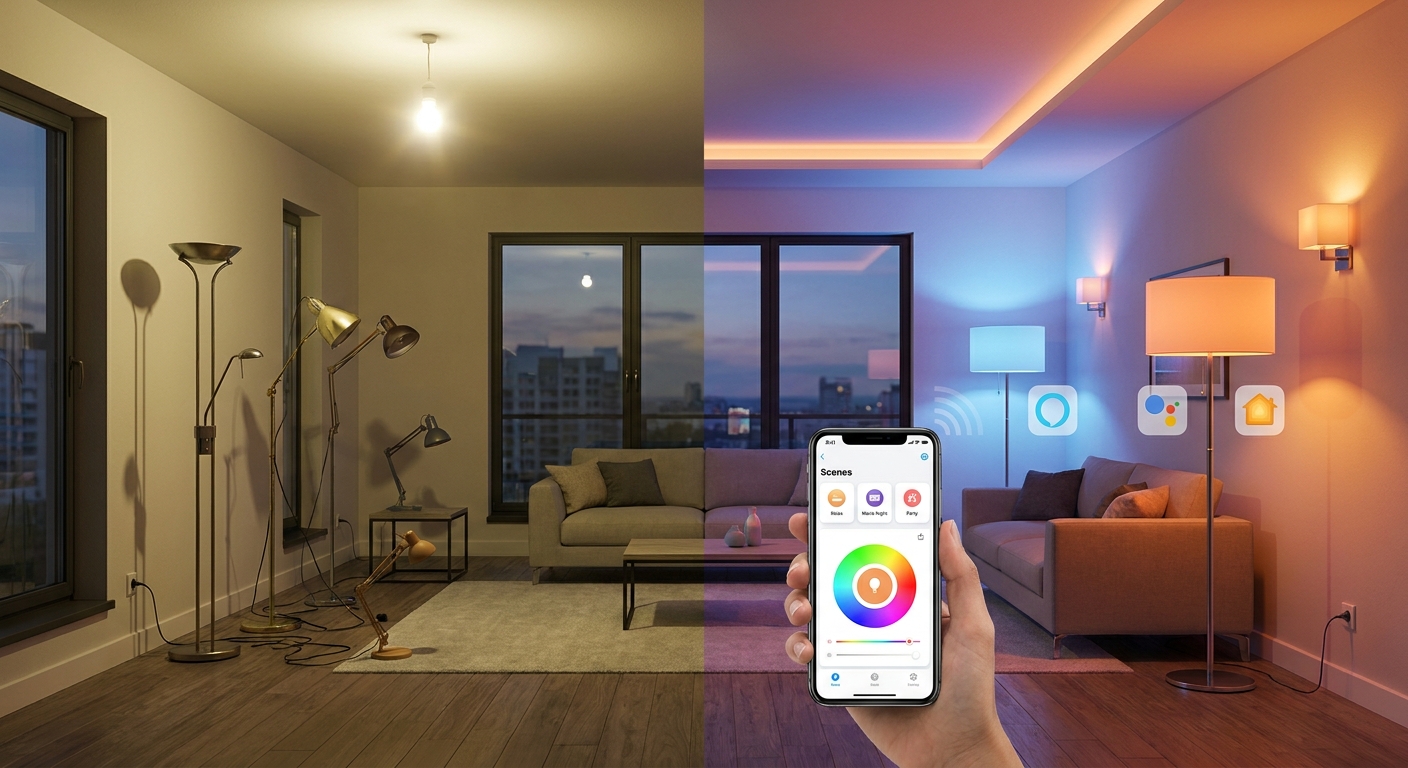
You are not imagining it. Smart lighting gets expensive fast. You start with one cute color bulb, then suddenly you are comparing hubs, bridges, Matter support, Alexa compatibility, Apple Home limits, and whether the app will still exist a year from now. That is enough to make anyone stick with the same harsh overhead lights and call it a day. The good news is that today is one of those rare moments when buying a proper starter bundle actually costs less than cobbling together random single-bulb deals.
If you are hunting for the best smart lighting starter kit deals today, the sweet spot is under $120. That is where several name-brand kits now include multiple bulbs, a bridge or hub when needed, and sometimes a dimmer or mini switch. In plain English, that means you can light a living room, bedroom, and hallway in one shot without ending up with a box of gadgets that do not talk to each other. The trick is to buy into the right ecosystem once, not three times by accident.
⚡ In a Hurry? Key Takeaways
- The best smart lighting starter kit deals today are bundled kits from trusted brands, not random single bulbs, because they often include the hub, app support, and enough lights for multiple rooms for under $120.
- Before you buy, pick your main setup first. Alexa, Google Home, Apple Home, or Matter. That one choice will save you money and frustration.
- Skip no-name kits with weak apps or unclear compatibility. A cheap bulb is not a deal if you replace it in six months.
Why starter kits beat random bulb deals
This is the part a lot of shoppers miss. Single smart bulbs can look cheap during a sale, but once you add enough of them to do a few rooms, the math changes. Some brands also need a bridge for the best reliability, faster response, and advanced automations. Buy those pieces separately and the total climbs in a hurry.
A good starter kit solves that. You get the core pieces in one box, you know they work together, and setup is usually much simpler. For most homes, that matters more than squeezing out a two-dollar savings on one bulb from a brand you have never heard of.
If you want another angle on this, our guide Today Only: Turn Any Home Into A Smart Lighting Sanctuary With Final‑Hour Prime Day Deals Under $80 covers the common trap of mixing bargain bulbs that end up needing different apps and different rules.
What to look for in the best smart lighting starter kit deals today
1. Enough bulbs to make a real difference
A starter kit should do more than one lamp in one room. Look for three to six bulbs at minimum. That is enough to change the feel of your main living space right away.
2. A hub only when it helps
Some people hear “hub” and assume it is a bad thing. Not always. With brands like Philips Hue, the bridge often gives you better automation, more stable control, and room to grow later. On the other hand, if you want dead-simple setup, a hub-free kit from a strong brand can be a better fit.
3. Support for your voice assistant
Check the box for Alexa, Google Home, Apple Home, or Matter. If your household already uses iPhones and HomePods, that matters. If you have Echo speakers in every room, that matters too. Buy for the home you have, not the one some influencer has.
4. A decent app
This sounds boring until you live with a bad one. The app is what you use to group rooms, set scenes, make schedules, and fix problems. A solid app turns smart lighting into something you enjoy. A bad app turns it into a chore.
The ecosystems, explained like a normal person
Alexa households
If you already use Echo speakers, look for kits that say “Works with Alexa” right on the product page. You will usually get easy voice control for on, off, dimming, and scenes.
Google Home households
Google Home works well for routines and whole-home control, especially if your family already uses Nest speakers or displays. Just make sure the kit supports Google Home directly and does not need a weird workaround.
Apple Home households
Apple users should be pickier. HomeKit or Apple Home support is worth confirming before checkout. Do not assume every bulb works the same way here.
Matter shoppers
Matter is the closest thing to a universal language for smart home gear. It is promising and getting better. Still, I would not buy a weak brand just because it says Matter on the box. Good brand first, Matter second.
Brands worth watching under $120
The deals change fast, but a few names are usually safer bets than mystery brands.
Philips Hue
Usually the most polished option. Great app. Great accessories. Reliable. It can be pricier, which is exactly why starter bundle discounts matter so much here. If you catch a kit with multiple white or white-and-color bulbs plus the Hue Bridge under $120, that is worth a close look.
Govee
Often strong value for people who want color, fun scenes, and easy app control without spending Hue money. Good for bedrooms, media rooms, and accent lighting. Just double-check smart assistant support on the specific kit.
Sengled and TP-Link Tapo/Kasa
These can be excellent for practical whole-home lighting. Think lamps, bedrooms, hallways, and daily schedules. Usually straightforward and less intimidating for first-time buyers.
How to avoid the dead-end gear
If the brand name looks unfamiliar and the app reviews are rough, move on. I do not care how low the price is. Smart home gear is software as much as hardware. If app support is weak, your “deal” can become a headache after the next phone update or router change.
Also watch for these warning signs:
- Product page is vague about Alexa, Google, Apple, or Matter support
- No mention of firmware updates or brand app
- Starter kit does not clearly say what is included
- Too many separate apps across one brand lineup
- Reviews mention frequent disconnects or setup loops
Best buying strategy for today
If your budget is under $120, do not try to make the entire house perfect in one order. Start with the rooms you use most. Usually that means the living room, main bedroom, and one hallway or office lamp.
Here is the simple plan:
- Choose your ecosystem first.
- Buy one brand only for the starter setup.
- Get the bundle with the most complete box, not the flashiest marketing.
- Add extra bulbs later only if they match that same system.
That approach saves money now and prevents the common “why do I have four lighting apps?” problem later.
At a Glance: Comparison
| Feature/Aspect | Details | Verdict |
|---|---|---|
| Starter bundle vs single bulbs | Bundles often include multiple bulbs, the needed bridge or hub, and better app integration for less than buying parts separately. | Best value today |
| Hub required or not | A hub can improve reliability and automations, but hub-free kits are easier for beginners if they still support your platform well. | Depends on your setup |
| Cheap unknown brands | Lower upfront cost, but often weak apps, patchy compatibility, and poor long-term support. | Usually skip |
Conclusion
If you have been putting off smart lighting because it always seemed too expensive or too confusing, today is the kind of sale window worth paying attention to. Right now there are rare stackable discounts on smart lighting starter bundles from big brands that quietly make them cheaper than piecing together single bulbs from a random deals list. That is the sweet spot. You save money, skip the ecosystem guessing game, and start with gear that can actually grow with your home. Our community saves time and money by focusing only on price-verified kits that can light multiple rooms at once and by steering clear of dead-end products with weak app support. Pick one solid system, buy one good bundle, and you can go from boring lighting to a much smarter home without ending up with a box of regrets.