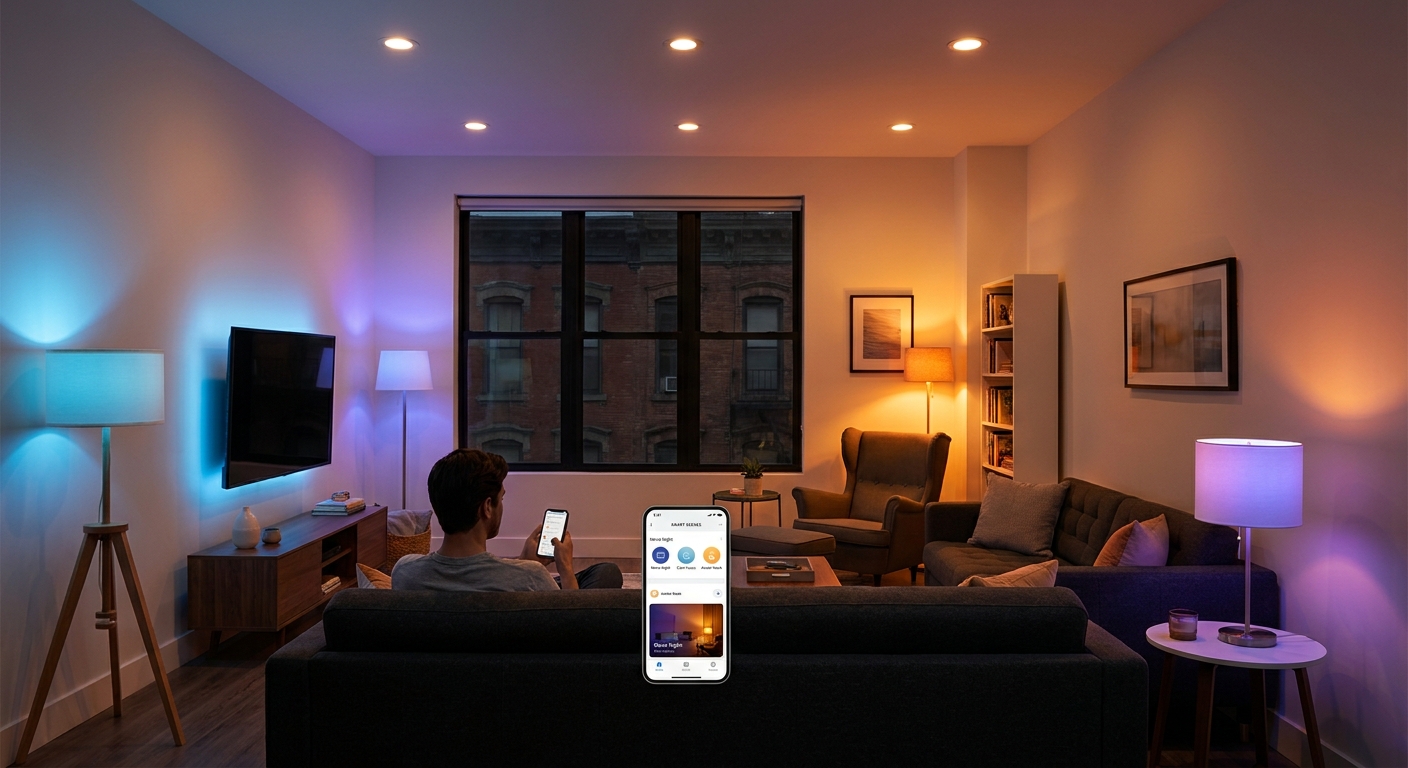
You should not need an electrician, a new app for every bulb, and a weekend of frustration just to make your living room feel warm and calm. A lot of people buy random smart bulbs during Prime Day, then find out half of them need a hub, the other half do not work with Alexa or Google, and none of them match in brightness or color. That is how you end up with a brighter wallet problem, not a better room. The good news is the best smart lighting deals today make this much simpler if you shop with a plan. Stick to one lighting system, start with the room that annoys you most, and keep your total under $80. That is enough to fix a dark desk corner, soften a harsh bedroom lamp, or add motion lighting to a hallway so you stop kicking furniture at midnight. Prime Day prices end tonight, so this is the moment to buy smart, not buy more.
⚡ In a Hurry? Key Takeaways
- The best smart lighting deals today are simple starter kits, 2-pack color bulbs, and motion night lights under $80 from one brand ecosystem.
- Pick your voice assistant first, then buy matching bulbs or a starter kit that works with it so expansion stays cheap later.
- Do not mix bargain bulbs from different systems unless you enjoy app clutter, setup headaches, and uneven light quality.
Start with the problem, not the gadget
Most people do this backward. They see a sale on a flashy color bulb, toss it in the cart, then wonder why the room still feels bad. Smart lighting works best when you fix one real annoyance at a time.
Ask yourself which of these sounds most familiar:
- Your living room feels flat and gloomy at night.
- Your bedroom lamp is too harsh when you are trying to wind down.
- Your office or kitchen has one dark corner that always feels annoying.
- You need low light for late-night bathroom trips or hallways.
Once you know the problem, the right deal becomes obvious. You do not need a full smart home. You need one small win.
The easiest under-$80 setups that actually make sense
1. For the living room: a 2-pack of color smart bulbs
This is the easiest place to start. Swap two lamps from plain white light to tunable warm light, and the whole room feels different. Look for bulbs that offer dimming, warm-to-cool white, and color if the discount is close enough in price.
Best use: table lamps, floor lamps, TV-side lamps.
Why it works: lamps create layered light, which feels softer and more expensive than one bright overhead fixture.
Budget target: usually $20 to $40 on Prime Day.
2. For the bedroom: a starter kit with bulbs and a button or mini hub
If your bedroom lighting is either “wake up” bright or “why am I still awake” bright, smart bulbs help fast. A starter kit is often better than loose bulbs because it gives you a simple control method besides your phone. That matters at bedtime.
Best use: bedside lamps.
Why it works: you can set warm, dim light for the evening and brighter light for mornings.
Budget target: around $40 to $80, depending on the brand and whether a hub is included.
3. For hallways and bathrooms: motion night lights or smart plugs
Not every lighting fix needs a fancy color bulb. A motion-sensing night light is one of the cheapest quality-of-life upgrades in the house. If you already like the lamp you have, a smart plug can automate it without changing the bulb at all.
Best use: hallway, bathroom path, nursery, entryway.
Why it works: it solves a real problem with almost no setup.
Budget target: $10 to $30.
How to avoid the biggest Prime Day smart lighting mistake
The biggest mistake is buying whatever is cheapest per bulb. That works fine until you want to add one more lamp next month and realize the line has been discontinued, the app is terrible, or it does not support your voice assistant.
Before you buy, check these three things:
Voice assistant support
If you use Alexa, Google Assistant, or Siri, make sure the bulbs clearly support it. “Works with smart home platforms” is too vague. Look for the actual names on the product page.
Hub or no hub
Neither option is wrong. Hub-free bulbs are easier to start with. Hub-based systems can be more reliable and often expand better. If you only want one or two bulbs, no hub is usually simpler. If you plan to add room by room, a starter kit with a hub may save money and trouble later.
Bulb type and brightness
Check whether you need A19, BR30, candelabra, or light strips. Also check brightness. A cheap bulb with weak brightness can make a room feel worse, not better.
The three best buying paths for non-techies
Path 1: “I just want my room to feel cozy tonight”
Buy a 2-pack of warm-dimming or color smart bulbs from a trusted brand. Put them in your living room lamps. Set them to warm white in the evening and dim them to about 30 to 40 percent.
This gives you the fastest payoff.
Path 2: “I want smart lighting that grows with me”
Buy one starter kit from a known ecosystem, then stop. Do not also buy random bargain bulbs from another brand just because they are on sale. Expansion matters more than shaving off five dollars today.
This is the best value if you know you will eventually add more rooms.
Path 3: “I only care about safety and convenience”
Buy motion night lights or one smart plug for a lamp near the hallway or bedroom. Set a schedule or motion trigger. This is the least flashy option, but honestly, it may be the one you appreciate most at 2 a.m.
What I would buy with an $80 budget
If you are overwhelmed, here is a simple done-for-you plan:
- One 2-pack of smart bulbs for the living room lamps.
- One motion night light or smart plug for the hallway or bedroom.
- If prices are especially strong, upgrade to a starter kit instead of the bulb 2-pack.
That setup fixes mood, comfort, and safety in one shot. No rewiring. No wall surgery. No “smart home expert” nonsense.
Where people overspend for no reason
You do not need to put smart bulbs in every ceiling fixture on day one. In fact, ceiling fixtures are often the worst place to start because they cost more to outfit and do less for the overall feel of a room.
Start with lamps. They do more with less.
You also do not need advanced scenes, automation chains, or color effects in every room. Warm white light in the right place solves most of the problem.
One more small Prime Day tip
If you are already putting together a comfort-at-home upgrade, it can make sense to pair lighting with something you will actually use in that calmer space. For example, if a better reading corner is your goal, this deal roundup on Today Only: Turn Your Reading List Into a Summer Escape With Early Prime Day Kindle Deals Up to 40% Off fits surprisingly well with a warm lamp setup.
At a Glance: Comparison
| Feature/Aspect | Details | Verdict |
|---|---|---|
| Best starter buy | 2-pack smart bulbs or a basic starter kit from one trusted brand, with Alexa, Google, or Siri support clearly listed | Best for most homes and easiest to expand later |
| Best budget fix | Motion night light or smart plug for a lamp you already own | Cheap, useful, and great for late-night safety |
| Biggest thing to avoid | Mixing random discounted bulbs with different apps, brightness levels, and compatibility rules | Usually costs more in time and money later |
Conclusion
The best smart lighting deals today are not about turning your house into a sci-fi demo. They are about making your home feel better tonight. That matters because smart bulbs and starter kits are heavily marked down for the final hours of Prime Day, and a lot of shoppers are one rushed click away from buying mismatched bulbs that do not work together, do not talk to the voice assistant they already use, or become expensive to build on later. A focused setup fixes the real stuff that gets on your nerves every day. Dark work corners. Harsh bedroom light. Hallway trips in the dark. Keep it simple, stick to one system, and use the sale window wisely before prices jump back up tonight.