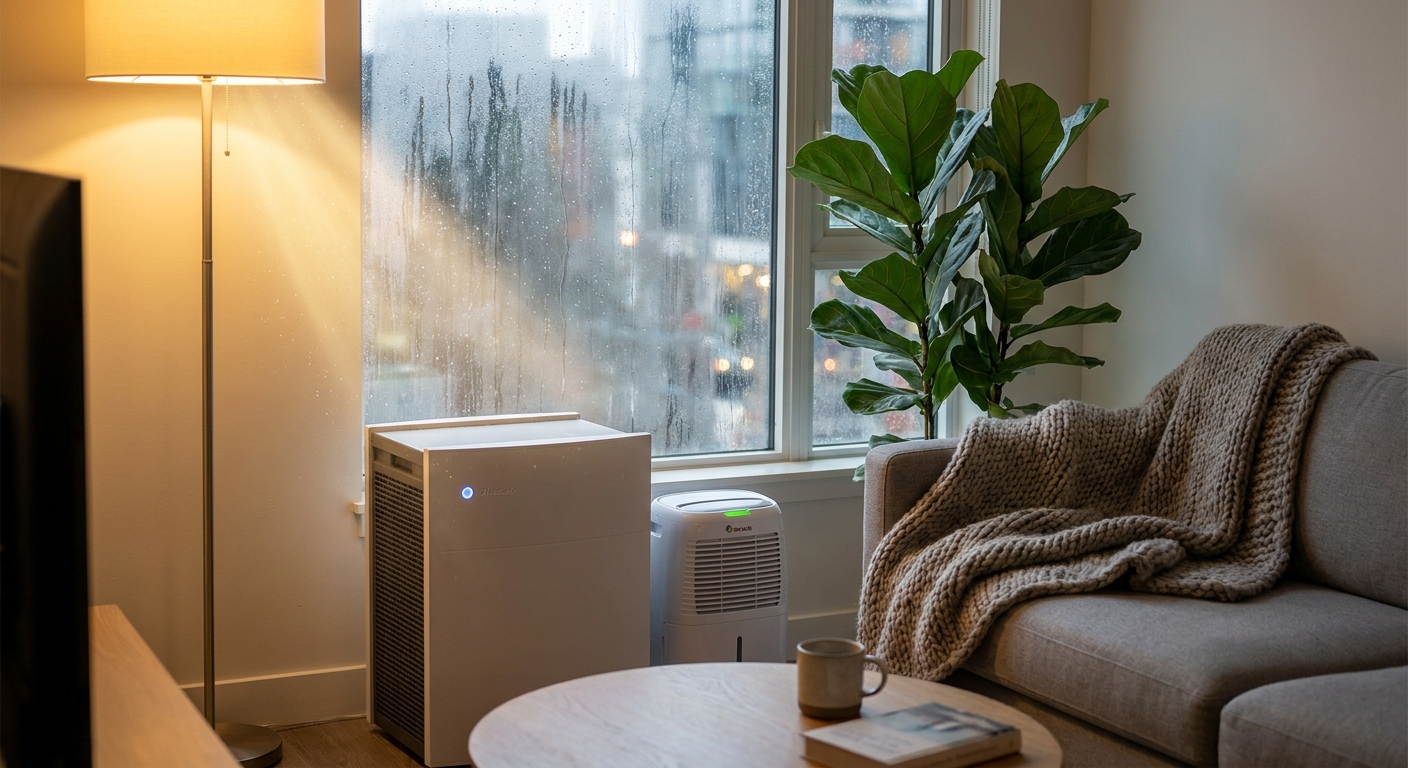
If your place feels stuffy, clammy, and just a little gross lately, you are not imagining it. This is one of those home problems that sneaks up on you. Your nose feels blocked, the windows fog, laundry takes forever to dry, and the air somehow feels heavy even when the thermostat says everything is normal. Then you go shopping and run straight into a wall of mystery brands, giant fake markdowns, and product pages that all sound the same. The good news is that some genuinely solid air purifiers and dehumidifiers are seeing real price drops right now, before the winter indoor-air mess really kicks in. That makes today a smart time to buy if you want relief from damp rooms, musty smells, allergens, or that stale “why does my apartment feel like a basement?” feeling. The trick is knowing which deals are actually worth your money, and which ones are just dressed-up regular prices.
⚡ In a Hurry? Key Takeaways
- The best air purifier and dehumidifier deals today are on known brands with clear room-size ratings, replaceable filters, and prices that are meaningfully below their usual street price, not just a fake crossed-out MSRP.
- Buy a purifier for allergies, smoke, dust, and odors. Buy a dehumidifier for condensation, musty smells, damp rooms, and humidity above about 55%.
- Skip no-name units with vague specs, inflated “covers 3000 sq. ft.” claims, or hard-to-find filters. Cheap junk gets expensive fast.
What is actually worth buying today?
Here is the simple version. If the main problem is dust, pet dander, cooking smells, smoke, or waking up congested, start with an air purifier. If the main problem is window condensation, a damp bedroom, a musty closet, or that sticky feeling even when the room is not hot, start with a dehumidifier.
If you have both problems, and a lot of people do, the best move is not some weird all-in-one gadget from a brand you have never heard of. It is usually better to buy one solid purifier and one right-sized dehumidifier for the room that needs help most.
If you want more help on the purifier side specifically, this roundup on Today Only: Smart Air Purifier & Air Quality Monitor Deals That Finally Fix Your ‘Why Does My Place Still Feel Stuffy And Allergies Still Suck?’ Problem is also worth a look, especially if allergies are your biggest complaint.
How to spot a real deal instead of a fake markdown
This is where a lot of shoppers get burned. A crossed-out price means almost nothing by itself. Some sellers leave a silly “list price” up forever just to make the current price look dramatic.
Good signs
Look for deals on brands with a track record, like Coway, Levoit, Blueair, Honeywell, Frigidaire, GE, Midea, or hOmeLabs. You also want clear specs. That means an actual room-size recommendation, noise rating, filter type, tank size, drainage options, and warranty details.
Bad signs
Be skeptical of vague claims like “medical grade,” “eliminates all toxins,” or “covers 2500 square feet” from a tiny desktop purifier. Same goes for dehumidifiers that brag about huge coverage but hide their daily moisture removal number.
A real deal usually checks three boxes. First, it is a known product people have bought for months, not a listing that appeared yesterday. Second, the current price is lower than its normal everyday sale price. Third, the consumables matter. If replacement filters cost a fortune or are always out of stock, the bargain is not much of a bargain.
Best types of deals to jump on right now
1. Mid-size HEPA air purifiers for bedrooms and home offices
This is the sweet spot for most people. A purifier sized for a bedroom, office, or living room is usually where the best discounts show up first. These models tend to give you the biggest quality-of-life upgrade without blowing up your budget.
What to look for: true HEPA or clearly labeled HEPA-grade filtration, a carbon layer for odors, sleep mode, and realistic coverage for a 150 to 400 square foot room.
Best for: allergies, pet hair, dust, cooking odors, and that stale indoor-air feeling.
2. Compressor dehumidifiers for bedrooms, basements, and laundry areas
If your windows are fogging or your room smells musty, this is probably the purchase that changes things fastest. A proper dehumidifier pulls actual moisture out of the air, which a purifier cannot do.
What to look for: 20-pint to 35-pint models for smaller to mid-size spaces, auto shutoff, continuous drain option, washable filter, and a humidity target setting.
Best for: condensation, mold-risk areas, damp walls, slow-drying towels, and that “everything feels slightly wet” problem.
3. Smart or semi-smart models that do not overcomplicate things
Smart features can be useful, but only if they solve an actual problem. App alerts for a full water tank, filter replacement reminders, and humidity tracking are genuinely handy. A purifier that needs an account, three permissions, and a firmware update just to turn on is less charming.
Best for: people who want set-it-and-forget-it convenience, especially in guest rooms, nurseries, or home offices.
Which one fits your room?
Small bedroom or office
Go with a compact purifier if your issue is congestion, dust, or pet dander. Go with a small dehumidifier only if you truly have moisture problems. Many tiny dehumidifiers sold online are underpowered. If you have serious condensation, skip the toy-sized models.
Living room or open-plan apartment
Buy the purifier based on the room where you spend the most time, not the biggest fantasy number on the box. For dehumidifiers, focus on where moisture collects. That is often a bedroom with bad airflow, a laundry area, or the room with the fogged windows.
Basement or very damp space
This is dehumidifier territory. A purifier can help with odors in a basement, but it will not solve the actual moisture issue. If the room smells earthy or moldy, lower the humidity first.
Quick buying advice that saves money later
Always check filter cost before buying a purifier. A cheap purifier with expensive filters can cost more over a year than a better machine with reasonably priced replacements.
For dehumidifiers, check how easy it is to empty the bucket. That sounds boring until you are carrying a heavy, sloshy tank to the sink every day. A continuous drain option is a huge plus if you have a floor drain nearby.
Noise matters too. If this is going in a bedroom, a whisper-quiet sleep mode on a purifier is worth paying for. Dehumidifiers are usually louder, so placement matters more.
At a Glance: Comparison
| Feature/Aspect | Details | Verdict |
|---|---|---|
| Air purifier | Best for dust, pollen, pet dander, smoke, and odors. Look for HEPA filtration, reasonable filter cost, and room-size ratings that match reality. | Best buy if your main problem is allergies or stale indoor air. |
| Dehumidifier | Best for foggy windows, musty smells, damp laundry, and moisture above 55%. Look for pint capacity, bucket size, and continuous drainage. | Best buy if your room feels wet, clammy, or mold-prone. |
| “Too good to be true” deal | Unknown brand, giant fake markdown, unclear specs, and replacement parts that are hard to find. | Skip it. Low upfront price often means disappointment later. |
Conclusion
If you have been putting this off because all the deal pages look like a mess, that is completely fair. Right now a lot of retailers are quietly cutting prices on air purifiers and smart or semi-smart dehumidifiers before the full winter rush, and this is usually the moment when the better values slip through before stock gets weird. The smart move is to ignore flashy fake markdowns and focus on proven models that match your actual problem and room size. A good purifier can make breathing easier, cut odors, and help with allergies. A good dehumidifier can stop that damp, heavy feeling and reduce the chance of mold and mildew. Stick to the short list, buy the tool that fits your space, and you can fix a very annoying everyday problem without wasting money on overhyped junk.