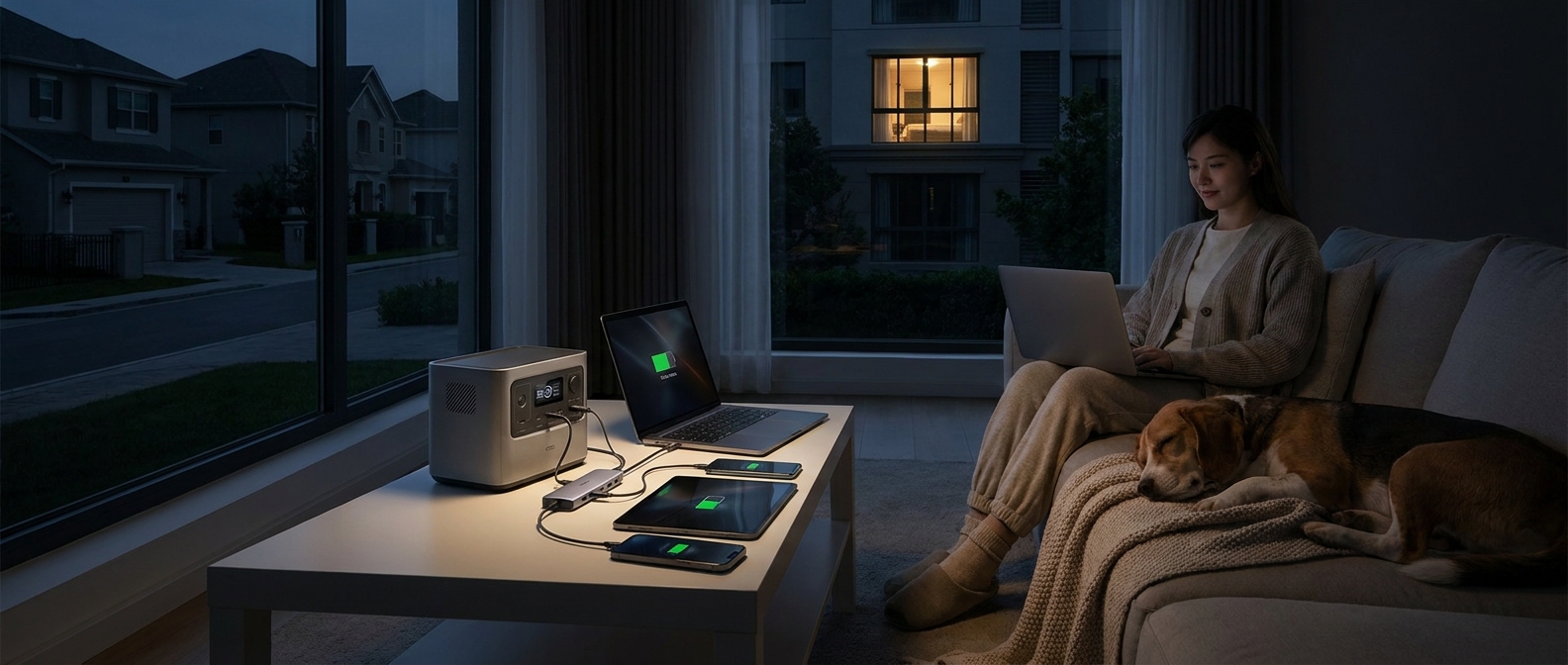
You do not think about backup power until the exact second you need it. Then the internet drops, your phone is clinging to 3 percent, your laptop warning starts flashing, and suddenly a normal Tuesday turns into a scavenger hunt for cables and open outlets. It is annoying because this is one of those problems most of us mean to fix “soon,” right up until a storm, long travel day, or overbooked workweek reminds us that “soon” never happened. The good news is that today is one of those rare sale windows where the fix is actually cheaper than usual. If you have been waiting to build a smarter setup with a compact power station, better surge protection, or a fast USB-C charger that can handle more than one device at a time, this is a very good day to do it. These are the best power station and charging deals today worth your attention.
⚡ In a Hurry? Key Takeaways
- Today is a strong time to buy compact power stations, smart surge protectors, and multi-port USB-C chargers because discounts are showing up across several major retailers at once.
- Start with your most common pain point. Home outage backup, travel charging, or desk cable chaos. Then buy the smallest gear that solves that problem well.
- Check wattage, port types, and safety certifications before you buy. The cheapest option is not a deal if it cannot safely power what you own.
Why this category matters more than people think
Most people treat power like plumbing. You only notice it when it stops working. That is fair, but it also means a lot of homes and work bags are one dead battery away from a bad day.
A small backup battery for your phone helps. A proper charging station helps more. And a compact power station can be the difference between “the lights flickered” and “my work, router, and essentials are still fine for a while.”
This is less about gadgets and more about friction. Fewer scrambles. Fewer low-battery arguments in the kitchen. Fewer moments where one outage or one forgotten charger throws everything off.
The three deal types worth watching today
1. Compact power stations
These are the heavy lifters. A compact power station is what you want if your goal is to keep important things running during an outage or away from an outlet. Think phone, tablet, laptop, lamp, modem, router, small fan, or even a CPAP in some cases, depending on the unit and your power needs.
The sweet spot for most people is a portable model that is not huge, has a clean display, offers AC outlets plus USB-C, and can recharge reasonably fast. For apartment living, road trips, and storm prep, that kind of unit makes a lot of sense.
If you work from home, pairing one with a better desk setup is even smarter. If that is your next project too, our guide to Today Only: October Prime Day Home Office Upgrade Deals That Finally Fix Your ‘Why Am I Still Working At A Wobbly, Neck-Killing Setup?’ Problem is worth a look.
What to check before buying a power station
First, battery capacity. More capacity usually means longer runtime, but also more weight and cost.
Second, output wattage. This tells you what the unit can actually power. A station may have a nice big battery, but if the output is too low, it may not run the device you care about.
Third, port mix. USB-C is a big one now. If a model still leans too hard on old USB-A ports, it may feel dated fast.
Fourth, charging speed. Some newer models recharge much faster than older ones. That matters a lot if you want something ready again by the next morning.
2. Fast USB-C chargers and charging stations
This is where most people should start. A good charger can clean up your daily life immediately. One compact brick with enough wattage can often replace the little pile of underpowered chargers around the house.
Look for GaN chargers from reputable brands. They run smaller and cooler than older designs, and many can charge a laptop, phone, and earbuds from one device. That means less clutter on the nightstand, less cable swapping at your desk, and fewer “who took my charger” moments.
If your current setup involves one ancient wall brick and a collection of mystery cables, this upgrade pays off fast.
3. Smart surge protectors and power strips
This is not the flashy purchase, but it may be the most practical one. A smart surge protector helps in two ways. It gives your growing pile of devices a safer home, and it can cut some of the cable mess that builds up around desks, media centers, and bedside tables.
The useful models now add USB ports, app control, energy monitoring, or individual outlet switching. That can be handy if you want to turn off vampire devices, reboot a stubborn accessory, or manage your desk more cleanly.
Just make sure you are buying actual surge protection, not just a basic extender strip pretending to be one.
How to choose the right deal for your real life
If outages are your main problem
Buy the best compact power station your budget allows, then test it before you need it. Plug in your router, modem, phone charger, and one lamp. See how the setup works in practice. The best system is the one you can use in the dark without reading a manual.
If your problem is everyday charging chaos
Start with a multi-port USB-C charger and a quality surge protector. This usually fixes the largest daily annoyance for the least money. It is also the easiest way to reduce cable clutter fast.
If you travel often
Look for a charger with enough wattage for your laptop and phone at the same time, plus a power bank that supports fast input and output. You want something that can refill quickly between flights or during a lunch stop, not a battery pack that takes forever to recover.
Do not buy on discount alone
A low price can distract people from the boring details that matter. A “deal” on a charger that tops out at weak speeds is not much of a deal. Same for a power station that looks rugged but lacks enough output, enough ports, or a trustworthy warranty.
Stick with known brands when power is involved. Read the wattage numbers. Check return policies. Look for UL listing or similar safety certification where appropriate. These are not exciting checkboxes, but they are the difference between useful gear and regret in a cardboard box.
What a sensible starter setup looks like
If you want a practical, non-overdone setup, here is a good starting point:
- A compact power station for outages, road trips, or emergency charging.
- A 65W to 100W multi-port USB-C charger for laptop, phone, and tablet duty.
- A real surge protector with enough spacing for chunky plugs and maybe a few USB ports.
- Two or three labeled cables that stay where they belong.
That is your micro-infrastructure. It sounds dramatic, but it is really just a calmer way to live.
At a Glance: Comparison
| Feature/Aspect | Details | Verdict |
|---|---|---|
| Compact power stations | Best for outages, travel, and keeping key devices running. Check capacity, output wattage, and port selection. | Best value if your main worry is resilience. |
| Fast USB-C chargers | Great for everyday use. A single higher-watt charger can replace several slower bricks. | Easiest upgrade for most people. |
| Smart surge protectors | Adds outlets, cable control, and better protection for desks and entertainment areas. | Quietly useful, especially when bundled into sale pricing. |
Conclusion
You do not need to turn your home into a bunker or carry a suitcase of batteries to fix this problem. You just need a few smart pieces of gear that match how you actually live. Power and charging gear is heavily discounted across multiple retailers today, which makes this one of the rare moments you can build a small but genuinely helpful backup setup without overspending. A compact power station, a solid surge protector, and a fast USB-C charger can take a lot of daily friction off your plate. If you have been meaning to stop treating power as an afterthought, this is a very good day to lock in a better setup while the prices are actually down.