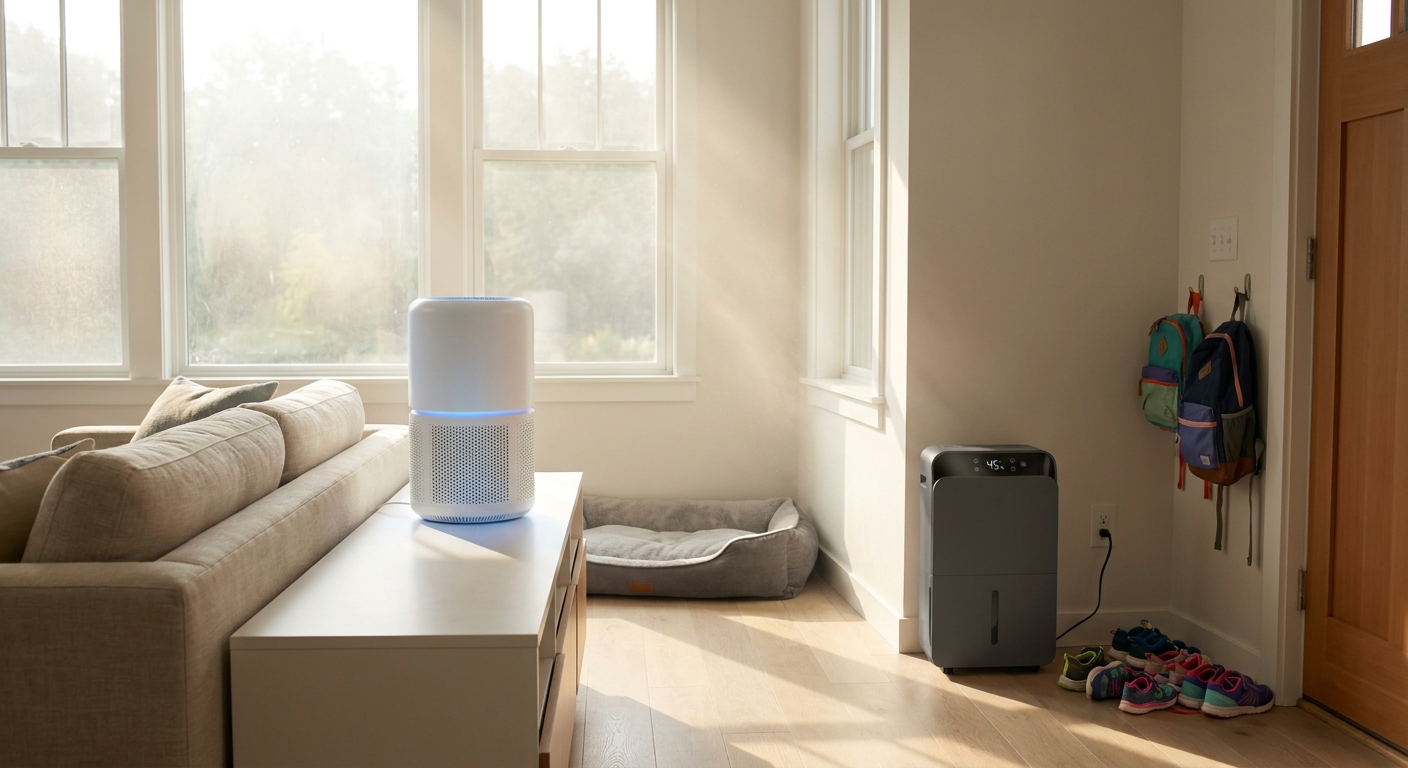
You are not crazy if your house still feels stuffy after you changed the HVAC filter, opened a few windows and tried every candle in the cabinet. A lot of homes hit this weird late-summer wall where the air feels damp, a little stale, and somehow full of dust, pollen or smoke anyway. Then you go shopping and every list acts like the answer is a giant $600 purifier with app controls you did not ask for. That is frustrating.
The good news is the best air purifier and dehumidifier deals today are not all premium splurges. A few well-priced HEPA purifiers can handle bedrooms, nurseries and living rooms without sounding like a leaf blower. And a properly sized dehumidifier can do more for a musty basement or clammy bedroom than another round of “air freshening” products ever will. The trick is matching the machine to the room, not just grabbing the biggest tower with the flashiest badge.
⚡ In a Hurry? Key Takeaways
- For allergies and smoke, start with a true HEPA purifier sized for your actual room. For dampness and musty smells, add a dehumidifier if humidity stays above 50 percent.
- Small bedrooms usually need a compact purifier, living rooms need a mid-size unit, and basements do best with an energy-efficient dehumidifier with auto-drain if possible.
- Do not overpay for giant “smart” models if your space is modest. Quiet operation, filter cost, and room-size rating matter more than flashy extras.
Why your home still feels bad even after “fixing” it
Indoor air problems usually come from two different issues that get mixed together.
First, there are particles in the air. Think dust, pet dander, pollen, wildfire smoke and the general cloud of back-to-school germs people worry about this time of year. That is where a HEPA purifier helps.
Second, there is moisture. If your home smells musty, windows feel damp, sheets feel clammy or the basement always seems a little swampy, that is a humidity problem. That is where a dehumidifier earns its keep.
One machine does not fully replace the other. A purifier cleans the air. A dehumidifier pulls water out of it. If your house has both problems, and many do, you will get the best result by treating both.
How to shop the best air purifier and dehumidifier deals today without wasting money
For air purifiers, ignore the marketing and check these four things
1. True HEPA filtration. This is the feature that matters most for smoke, pollen and fine particles. If the listing is vague and keeps saying “HEPA-type,” keep moving.
2. Room size. A purifier made for 200 square feet will struggle in a 450-square-foot living room. That is when people say, “I bought one and it did nothing.”
3. Noise level. A purifier only works when you actually leave it on. A slightly less powerful quiet model often beats a louder one that gets turned off at bedtime.
4. Replacement filter cost. The sticker price is only part of the story. A bargain purifier with expensive filters can stop being a bargain in a hurry.
For dehumidifiers, focus on practical features
1. Capacity that fits the space. Small bedrooms and bathrooms may be fine with a smaller unit. A basement usually needs more capacity and stronger drainage options.
2. Auto shutoff or auto restart. Handy if you are running it while away or dealing with a damp lower level.
3. Drain hose support. If you are emptying a bucket twice a day, you will get tired of it fast. Continuous drain support can be the difference between using it and abandoning it.
4. Energy efficiency. A dehumidifier can run for long stretches. Choosing a model that sips power matters, especially if you are also running AC. If your summer electric bill is already making you wince, it is worth also checking Today Only: Smart Thermostat & Energy Monitor Deals That Finally Fix Your ‘Why Is My Power Bill So High?’ Problem for a few easy ways to keep costs from creeping up.
What actually makes sense for common rooms
Bedroom or nursery
Go for a compact or mid-size HEPA purifier with a good sleep mode. This is where noise matters most. You want something that can quietly run all night, not a powerful box fan impersonator.
If the room feels damp or closets smell a little funky, a small dehumidifier can help, but be realistic. Tiny novelty units usually do not do much in a truly humid room.
Living room or open family room
This is where people often underbuy. Open spaces need a purifier rated for larger square footage, especially if you have pets, cook often, or are dealing with wildfire smoke drifting indoors. A medium-to-large HEPA purifier on sale can be the smart middle ground. You do not always need the top-tier “designer” model.
Basement or laundry area
If it smells musty, skip the candle aisle. A dehumidifier is the right tool here. Look for a model made for medium to large damp spaces, preferably one that supports continuous drainage. This is usually the best value move if you are trying to lower mold risk and make the whole house smell cleaner.
Home office or classroom corner
Back-to-school season tends to bring more sniffles into the house. A smaller purifier near a desk setup can help with dust, pet hair and the general stale-air feeling from closed-up rooms. It is not a magic germ shield, but it can improve comfort and air quality in a space where you sit for hours.
When to buy an air purifier, a dehumidifier, or both
Buy a purifier if: allergies flare indoors, smoke is creeping in, dust keeps settling fast, or pets are part of the problem.
Buy a dehumidifier if: the room smells musty, the air feels sticky, you see condensation, or the basement always feels damp.
Buy both if: you have allergy symptoms and the house feels muggy. That combo is extremely common right now.
Red flags to skip, even on sale
A deal is only a deal if the machine solves the problem.
Be careful with purifiers that never clearly say “true HEPA,” dehumidifiers with tiny tanks for large areas, and anything with suspiciously huge room-size claims at a bargain-basement price.
Also watch out for units that are technically powerful but painfully loud. A noisy machine in a bedroom or family room often ends up unplugged, which makes the low price meaningless.
At a Glance: Comparison
| Feature/Aspect | Details | Verdict |
|---|---|---|
| HEPA air purifier | Best for smoke, dust, pollen, pet dander and everyday allergy relief. Match the coverage rating to your room. | Best pick for bedrooms, living rooms and homes dealing with wildfire haze. |
| Dehumidifier | Best for sticky air, musty smells, condensation and mold-risk spaces like basements or laundry rooms. | Best fix for damp rooms where “fresh scent” products are just covering up the issue. |
| Premium smart models | Can offer app control and sensors, but often cost much more than standard units with similar core performance. | Worth it only if the price drop is strong and you will actually use the extra features. |
Conclusion
If your home has been feeling stale, damp or allergy-triggering, this is one of those times when the right appliance is not a luxury buy. It is a comfort and health fix. Wildfire smoke, late-summer humidity and back-to-school germs are all peaking at once, so indoor air quality matters more than usual right now. The best air purifier and dehumidifier deals today are the ones that fit your real room size, your actual problem, and your budget. Pick a true HEPA purifier for particles, an energy-efficient dehumidifier for moisture, or both if your house is dealing with that all-too-common mix of sniffles and mustiness. Done right, you can clear out a bedroom, calm down a basement and avoid wasting money on oversized towers or noisy junk that never stays plugged in.